
BUCHAREST VICTORIA AVENUE BUILDINGS
Victoria Avenue in Bucharest has got a lot of buildings, many of them very old. Since we have been living in Bucharest for more than 20 years, we know them well. We are talking about Victoria Avenue in Bucharest, the main street the Romanian Capital since 17th century. It is an interesting tour to come from Old Town to Government headquarters and see the Bucharest Victoria Avenue buildings.
HISTORICAL BUILDINGS ON VICTORIA AVENUE BUCHAREST
So I decided this year in February to take a look at the buildings you can see on your right or left on Victoria Avenue Bucharest. We started our journey from Victoria Square in order to reach, at the end, the Old City. Here we could have lunch like any foreign tourist interested in the history and life of this street. About the VICTORIA PALACE I won’t write now, for I have already done it. I’ll try to focus on unknown buildings.
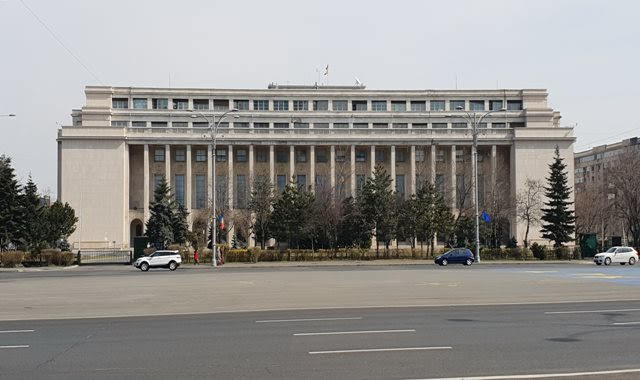
GOVERNMENT BUCHAREST
Victoria Palace is the Government Headquarters and its front side is 100 meters.
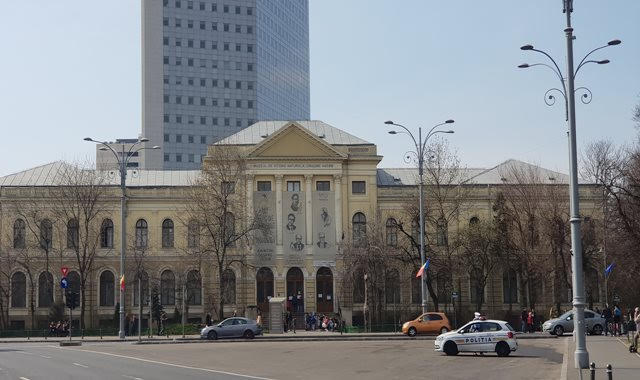
ANTIPA MUSEUM BUCHAREST
The Natural History Museum is in Victoria Square just near the Government Headquarters.
ENTRANCE TO VICTORIA AVENUE
This is the entrance to Victoria Avenue from Victoria Square.

FILIPESCU CESIANU HOUSE BUCHAREST

CESIANU HOUSE VICTORIA BUCHAREST
Filipescu Cesianu House on Victoria Avenue is on the right side as you come from Victoria Square. It is one of the few buildings in Bucharest keeping the Belle Epoque architectural style.

ART INSTITUTE G OPRESCU BUCHAREST
Also known as Dissescu House this is the Art Institute George Oprescu in Bucharest.
Now, next on your left when you come from Victoria Square on Victoria Avenue you will see a poor building. And you will be ready to believe it is haunted. And, yes, it is. The Institute for the History of Art as it is known today is the old Dissescu House. Another rich family of Bucharest built it in the 19th century, Lahovary. Here also lived the son of a lord of the old times, Grigore Sturdza, also known as the Calif, according to some historians. It was Constantin Dissescu who restored the building after 1910. In 1933 it housed the Italian Culture Institute and from 1967 the The Institute for the History of Art. We didn’t dare to try to enter this building on Victoria Avenue and find some pieces of culture.
OLD BUILDING NOW A CASINO
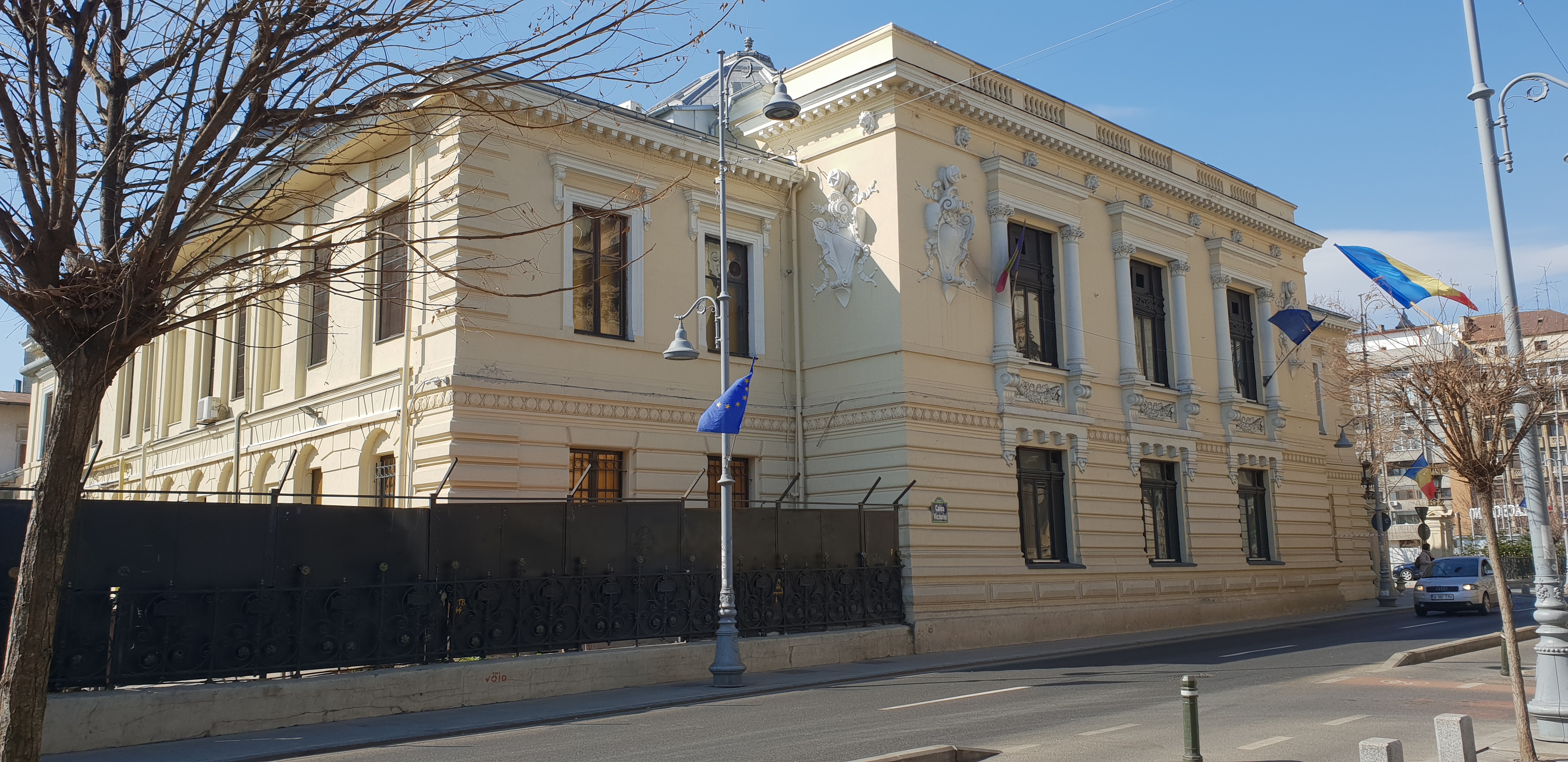
This is now a casino although it has one of the greatest stories in the Romanian Capital. It’s name is Lens-Vernescu House. It is here from the year 1821. Between 1853 and 1856 it housed the Supreme War Council of the Russian Army and also the Romanian Ministry of War. Lev Tolstoi, the great Russian writer visited it. Authorities restored it after 1887 and it housed the headquarters of the Economy Ministry and even the Romanian Government. It was seized by the communists after 1946 and became protocol house for the party leaders. In 1990 became the headquarters of the Union of Romanian Writers and, then, Victoria Casino. Now, only the name has changed.
PALACE CASINO BUCHAREST
Vernescu House is on the right side of Victoria Avenue as you come from Victoria Square.

ACADEMY IS ONE OF BUCHAREST VICTORIA AVENUE BUILDINGS
ROMANIAN ACADEMY VICTORIA AVENUE
The Romanian Academy Headquarters is a historical monument and you can see it on your right on Victoria Avenue as coming from Victoria Square.

DANUBE RIVER NEIGHBORS COUNCIL BUCHAREST

GERMAN HEADQUARTERS BUCHAREST WW2
During World War Two here was the German Diplomatic Mission and after that the Cesianu House as it was known became Victoria Casino and now it is consolidated and you can see it on your left while coming from Victoria Square on Victoria Avenue.
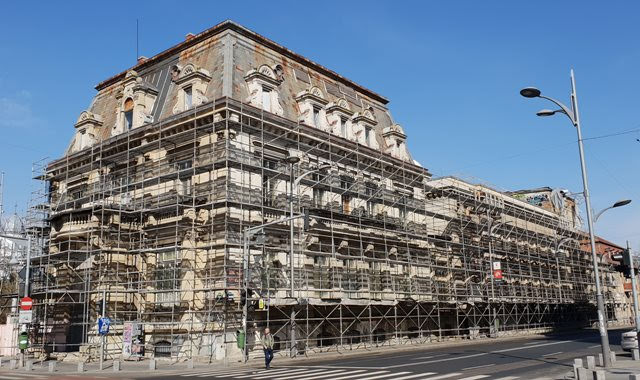
MONTEORU HOUSE VICTORIA AVENUE
Monteoru House which you can see on your right on Victoria Avenue immediately after the Romanian Academy was abandoned and is now under reconstruction as it was built in 1873.

ENESCU MUSEUM VICTORIA AVENUE
George Enescu Museum is on Victoria Avenue and is a beautiful building you cannot miss on the right side as you come from Victoria Square.

Enescu Museum in Bucharest is just a few meters from Monteoru House and you cannot miss it due to the two lions in front of the entrance. We have already wrote about ENESCU MUSEUM IN BUCHAREST so I will only tell you a few words about this building on Victoria Avenue and its story. It was built in 1900 for the former mayor of Bucharest Gheorghe Grigore Cantacuzino, a very rich man called the Boss. His daughter, Maria-Rosetti Tescanu married George Enescu, but she and the great composer lived in the house hidden behind the museum. It was built in the French baroque style and will become since 1947 the headquarters of an Institute for studies about Russia and Romania diplomatic relations. In 1955, according to Enescu’s will, the building will house the Union of Romanian Composers.
CHURCH VICTORIA AVENUE BUCHAREST
This church initially built at about 1804 is called Sfantul Vasile Church and is on the left of Victoria Avenue across George Enescu Museum.

MUSEUMS ARE AMONG BUCHAREST VICTORIA AVENUE BUILDINGS
Our next stop was the Art Collections Museum whose building has a fine story too. About the Museum we have already written HERE. Now, I will only tell you a few things about the building itself. It was built from 1801 to 1845 when the owner, a boyar as he was called, Gheorghe Faca died. As the new owner was called Romanit, this building on Victoria Avenue is also known as Romanit House. It became a protocol house for two lords in the early 19th century and also, here, it was signed the peace between Serbia and Bulgaria in February 1886. It was also the headquarters of the Government in 1838. Many of the architectural details will be destroyed by communists after 1954. Since 2003 it is the new Art Collections Museum you can see on your right walking on Victoria Avenue.
ART COLLECTIONS MUSEUM VICTORIA BUCHAREST
Art Collections Museum is on your right on Victoria Avenue while coming from Victoria Square and it worth visiting if you have time.

ANOTHER FINE BUILDING ON VICTORIA AVENUE BUCHAREST
It is on the right as you come from Art Collections Museum and it has got something strange so that it is impossible not to see it. Stirbey Palace was built in 1835 by the French architect Michel Sanjouand at the order of the next ruler of the Romanian Country, Barbu Stirbey. He will use it as royal residence. During communism, the building will become museum and then, after 1990, nothing. In 2005, Barbu Stirbey’s successors sold the building to a private and now you can have a drink in the backyard where there is a pub.
STIRBEY PALACE VICTORIA AVENUE
Stirbey Palace was built in 1825 and you can see it on your right side as coming from Victoria Square on Victoria Avenue

ART MUSEUM VICTORIA AVENUE
The Art Museum or the Royal Palace is on Revolution Square and you can see it on your right side if you come on Victoria Avenue from Victoria Square.

ROMANIAN ATHENAEUM VICTORIA AVENUE
The Romanian Athenaeum is on the left on Victoria Avenue just after you already saw the National Art Museum on your right

COMMUNIST PARTY BUILDING ON VICTORIA AVENUE
If you ask where the Romanian Revolution in 1989 began and you are in Revolution Square in Bucharest, the answer is on your left as you come from Victoria Square, across the Royal Palace. The Palace of Interior Affairs building on Victoria Avenue was built by the architect E. Nadejde between 1938 and 1948 in neoclassical style. It became the headquarters of the Central Committee of the Communist Party and in 1989 of the Romanian Senate, until this institution moved to the PALACE OF PARLIAMENT.
EX COMMUNIST HEADQUARTERS BUCHAREST
After you saw The Athenaeum on your left also on the left on Victoria Avenue you will the former headquarters of the Communist Party before 1989 and the place where the Revolution in 1989 began.

PALACE OF ROYAL FOUNDATON CAROL FIRST
This Palace which housed the Central University Library was built on a place bought by King Carol 1st in 1895 and you can see it on your left on Victoria Avenue as you come from Victoria Square.

KRETZULESCU CHURCH IS THE MOST IMPORTANT AMONG THE
BUCHAREST VICTORIA AVENUE BUILDINGS
Kretzulescu Church is on your right on Victoria Avenue just across the former Headquarters of the Communist Party in Revolution Square.

AMERICAN TOWER IS ON THE BUCHAREST VICTORIA AVENUE BUILDINGS
Two architects from New York built this massive building on Victoria Avenue from 1931 to 1933. It is the Communications Palace or Phones Palace. Their names are Louis Weeks and Walter Froy. It was the highest building in Bucharest until 1971 and the only one built on metal structure. It is Art-Deco style, a copy of the American skyscrapers. Almost destroyed by the bombs in 1944 and by the 1977 earthquake, authorities restored it in 2005.
COMMUNICATIONS PALACE VICTORIA AVENUE
The Communications Palace was built between 1931 and 1933 following the plans of two American architects and had been the highest building in Bucharest since 1971 and you can see it on your right on Victoria Avenue as you come from Victoria Square.

CAPSA HOUSE IS THE PEARL AMONG THE BUCHAREST VICTORIA AVENUE BUILDINGS
Capsa House Hotel and Restaurant was built at about 1830 and has one of the most interesting stories in Bucharest, you can see it on your right coming on Victoria Avenue from Victoria Square.

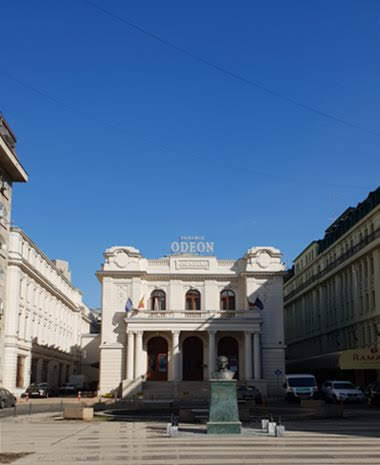
ODEON THEATER BUCHAREST
Odeon Theater is a fine theatre. They built it between the two world wars. In 1946 became the theater of the workers according to the communist ideology. It is on your left on Victoria Avenue.
CAPITOL HOTEL VICTORIA AVENUE
Near Capsa House you can see on your right coming from Victoria Square The Capitol Hotel. They called in 1911 Louvre Hotel. A fire destroyed it.

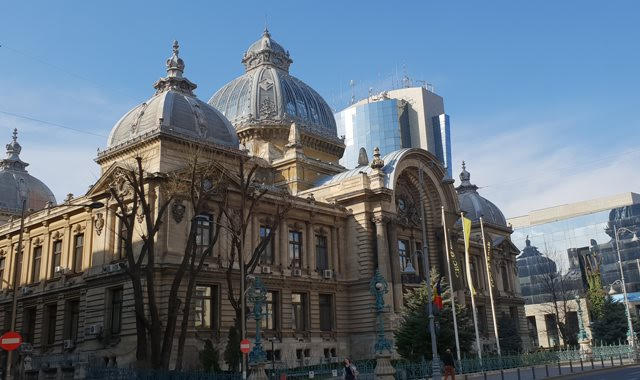
CEC PALACE IS ONE OF THE
BUCHAREST VICTORIA AVENUE BUILDINGS
NATIONAL HISTORY MUSEUM IS ONE OF THE BUCHAREST VICTORIA AVENUE BUILDINGS
The Romanian National History Museum is on the left on Victoria Avenue as you come from Victoria Palace. And the front side is a copy of Post Palace in Geneva.
