
BUCHAREST HISTORY
Bucharest history is part of Romania history. The modern city you can visit today was a small village in the 16th century. So, Bucharest history is not so long like London’s or other European capitals. The town became the capital, actually, only about 200 hundred years ago. Yet, there are fascinating stories from the Romanian capital. From the time when boyars built Cismigiu gardens to the modern communist era when they built House of People. And even, nowadays, Bucharest looks like a effervescent place. Night life is indeed one of its main attraction.
BUCHAREST HOUSE OF PEOPLE
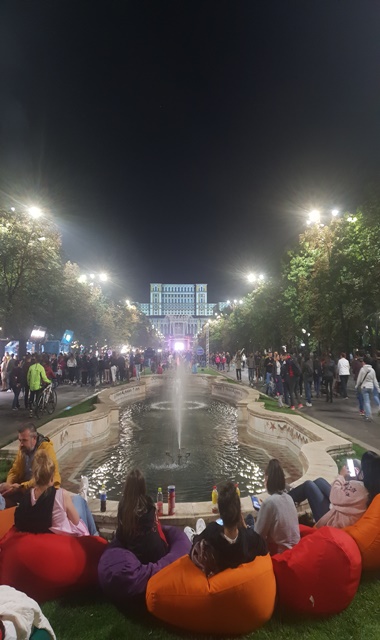
By: BUCHAREST-TRAVEL.COM
TRAVEL TO THE HISTORY OF BUCHAREST
Written by:
Bucharest Travel
Published by:
Bucharest Travel
Copyright holder:
Bucharest Travel
on
BUCHAREST OFFICIAL HISTORY
When Bucharest appeared? Well, its history goes back in time in the early 15th century. It was the time when a shepherd named Bucur settled here. He found food and good water for his sheep. His name was written down by a Franciscan monk, Blasius Klainer in 1761. In the 15th century, the first monasteries had already been built. But in the same time, the local lords had to buy their power from the Turkish Empire. And the people would always pay for that.
THE OLD COURT
The center of the city was the OLD COURT whose ruins you can visit today. From here the lords of the Romanian Country would govern. It was the center of power. In the recent years, which means by 2025, authorities started restoration works here. If you are lucky you might be able to visit the area. It is the ruin of the old court. Such ruins are also near the National Bank of Romania. They are from the same period.
OLD COURT DRACULA PALACE

By: BUCHAREST-TRAVEL.COM
Photographed In: OLD COURT IN OLD CENTER BUCHAREST
Date Uploaded:2016-03-24
Description: The old court of Romanian Rulers in the Old Town Bucharest
DRACULA AND BUCHAREST HISTORY
Around this Old Court, an entire city has been built for more than 200 years. Let’s don’t forget Dambovita River. Bucharest will flourish on its shores. And also a smaller river, called Bucurestioara. It may be the real origin for the name of the city. Vlad the Impaler, the famous lord known better in literature as Dracula, signed a few laws. In one of them he wrote down the name of the fortress of Bucharest. This happened on September, 20, 1459. This information is according to the history of Bucharest from THE MUSEUM OF BUCHAREST.
OLD COURT MUSEUM BUCHAREST

By: BUCHAREST-TRAVEL.COM
Photographed In: BUCHAREST OLD COURT IN OLD CITY
Date Uploaded:2016-03-24
Description: The headquarters of Dracula palace in Bucharest
BUCHAREST HISTORY OF WAR
Another lord made this fortress a real stronghold: Mircea the Shepherd. During his reign, between 1545 and 1554, markets appeared around the Old Court. And also houses and churches. Many of them can be seen today at the VILLAGE MUSEUM IN BUCHAREST. Of course, the suburbs appeared, each one bearing its profile and name, according to the inhabitants’ skills. They are now the districts of Bucharest, although their inhabitants, their inhabitants’ skills and names were lost in time.
WHEN BUCHAREST BECAME THE CAPITAL
The city became the capital of the Romanian Country in 1659. The 18th century, Bucharest was under the power of the Turkish Empire. Although the lords had their important independence. The most amazing architectural landmarks were built in that century. There were more than 200 years when Bucharest had to face many wars. A modern administration was to be brought from abroad, by Russians. But, ironically, it was a French influence to modernize the state and the capital too. And to change the history of society, a change to last until World War II.
BUCHAREST ADMINISTRATION IN THE PAST
The administration was at the beginning, which means in the 17th century, divided into The Inner Market and the Outer Market. The first one was the Old Court. The second was the suburbs. It was just like in other European capitals. In 1789, Bucharest was divided into five areas. In 1831, a sort of constitution will become the basis of the administration in the Romanian capital, the so-called Organic Regulations and those five areas will become colors. Thus, we will have the Red Color which was the Inner Market, Mogosoaia was to be The Yellow Area, the Outer Market was the Blue Color and so on.
THE TOWN HALL
The Romanian National Bank( which has an interesting museum, learn more here MUSEUM OF THE ROMANIAN NATIONAL BANK) was the 13th central bank founded in the the whole world, before the FED or the Central Bank of Japan, in 1880. It was the time when the Jewish community would gather more power and, by law, they could finally become Romanian citizens. That was the moment when, the Choral Temple in Bucharest was built. In 1926, a new age is about to begin. Town Halls will come into being, under clear laws.
BUCHAREST TOWN HALL

By: BUCHAREST-TRAVEL.COM
Photographed In: Bucharest Town Hall, near Cismigiu Garden
Date Uploaded:2016-03-24
Description: Bucharest Town Hall, the headquarters of the administrative power in the Romanian Capital
BUCHAREST AND NICOLAE CEAUSESCU
As history decided, the communists devided the city again in 1950 into eight areas. Nowadays, there are six areas. The most important change in Bucharest during the communist period was the center. We are talking about the building of the HOUSE OF THE PEOPLE and the gigantic boulevard in front of it.
The civic center was Ceausescu’s personal ambition and for that had to die a lot of people, many had to move for their houses were to be put to the ground, also churches, markets and so on. In 1989 communism fell after a bloodbath in December and the REVOLUTION SQUARE will always remember the moment. The entire center of Bucharest has got a new face in the 80s, as symbol of power. Now the power is at Presidency Headquarters, COTROCENI PALACE.
INTERESTING FACTS ABOUT BUCHAREST HISTORY
>In 1861, the streets of Bucharest are lighted by gas before Paris or London were.
>In 1899 lived in Bucharest six Chinese.
>In the same period, the English baby-sitters thought they served some half-educated aristocrats in a country full of white slaves, but who payed them very well.
When they found out that in Europe is a must to have a husband and also a lover, ladies in Moldavia decided to have a husband and two lovers to be higher than the high European society.
THE FRENCH INFLUENCE IN BUCHAREST
Why was Bucharest called the little Paris? See a part of the answer on our page dedicated to the BUILDINGS ON VICTORIA AVENUE BUCHAREST!
BUCHAREST HISTORY AND THE LITTLE PARIS
By: BUCHAREST-TRAVEL.COM
Photographed In: BUCHAREST OLD CITY
Date Uploaded:2016-03-24
Description: Why was Bucharest the Little Paris in history

WHY CALL BUCHAREST THE LITTLE PARIS?
It has to do with the middle class which became stronger and stronger under western influence since 1805. Businessmen came to Bucharest, young Romanians studied abroad, artists, politicians. Bucharest was the only place in South-Eastern Europe where the Turkish had no more power about the inhabitants’ behavior and lifestyle. Bucharest was no longer part of the Balkans. The city found its identity in Paris. The architecture was influenced by great artists like Albert Galleron, Cassian Bernard, Xavier Villacrosse or Paul Gottereau. Thus, it will become the most important city in South-Eastern Europe after Istanbul, the capital of the Turkish Empire.
HOW MANY PEOPLE LIVED IN BUCHAREST IN THE 19TH CENTURY
At about 1830, there were more than 60.000 inhabitants in Bucharest. While Sofia, Belgrad or Athens only had about 20.000. Until 1895 there were no railway stations in the country. And Bucharest was not quite a center of Romania with a decent infrastructure. You can see more about this at the RAILWAYS MUSEUM BUCHAREST.
BUCHAREST TODAY AND THE TOURISTS
Now, Bucharest is the capital of a country member of the European Union, NATO and so on. More than 2 millions of people live and work in Bucharest. Also more than 2 millions of foreign tourists come and visit The House of People and the Old City. Bucharest churches, museums and parks. Many of them enjoy its history, Dracula’s legend, its mysteries. Foreigners learn more about Nicolae Ceausescu’s fate, famous painters’ work spread all around the city in museums. Bucharest changed a lot after the Revolution in 1989 against the communist party. In fact, it was a bloodbath you can learn more at REVOLUTION HEROES CEMETERY.
COMMUNIST PARTY HEADQUARTERS

By: BUCHAREST-TRAVEL.COM
Photographed In: Revolution Square, Bucharest, Romania
Date Uploaded:2016-03-24
Description: The headquarters of the Communist Committee Party
There are still many things to do in Bucharest. The administration, the traffic and so on. Yet, Bucharest is a great place to spend few days like a city-break. One week would be alright if you plan to visit the Black Sea shore or Prahova Valley. Some fell in love with this city and never left it. Some have missed it for their whole life, like the great Romanian scholar, Mircea Eliade. For more about the Romanian literature, you need to visit BUCHAREST LITERATURE MUSEUM. There is always something new to discover in Bucharest, strange streets and buildings. There are amazing sunsets or dawns, funny and interesting people, beautiful places.
SEE BUCHAREST AIRPORT
BUCHAREST UNIVERSITY IN 1910
By: BUCHAREST-TRAVEL.COM

Photographed In: University Square Bucharest
Date Uploaded:1910-01-25
Description: Bucharest center in 1910 the University Square
UNIVERSITY SQUARE IN BUCHAREST

By: BUCHAREST-TRAVEL.COM
Photographed In: University Square Bucharest
Date Uploaded:2016-03-24
Description: University Square in Bucharest, one of the most important places in the Romanian Revolution
BUCHAREST USEFUL LINKS